Sunday, 13 February 2011

Paul Verhoeven Film Restrospective - The 4th Man

The 4th Man, aka De Vierde Man is Paul Verhoeven's 6th film and would be the last one he made in his own country of Holland until his triumphant return over 20 years later with Black Book. It is also the first of his films that we come to that I had already seen as it was shown once on Channel 4 in the mid 90's. I couldn't remember that much about it other than finding it disappointing and rather pointless. I did remember that it was an erotic thriller, maybe similar to Basic Instinct. As it turned out, my memory was wrong.

The 4th Man is a good film, but very unusual. Describing the story without giving anything away is difficult, but essentially Jeroen Krabbé stars as a bisexual author who meets and falls in love with Renée Soutendijk at a talk he is giving and sees an opportunity to get close to her ex-boyfriend who he secretly lusts after. He also has these weird dreams and visions, but what could they mean?

Like I said, The 4th Man is a very unusual film, which might be why I didn't like it much the first time I saw it. I also think it's because it wasn't the film I was expecting to see. I was looking forward to an erotic thriller in a similar vein to Verhoeven's own Basic Instinct, but instead got something completely different. On second viewing, remembering my disappointment, I watched it with different expectations and enjoyed it considerably more. It is a film where a lot can be left to interpretation as the film deals with one man's dreams and visions. How he interprets them is not necessarily the correct way of interpreting them.
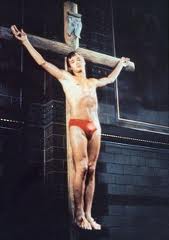
There is a lot of religions symbolism in the film, and not just within the dream sequences. The film begins with a close up image of a spider killing a fly and wrapping it in it's web that's located on a cross. As is typical for Verhoeven, the symbolism is not very subtle, but it is a fantastic bit of footage. The film also features a mother playing with a long piece of apple peel, which forms a halo behind her son's head that is reminiscent of similar imagery in both Spetters and his next film, Flesh And Blood. The religious symbolism was a deliberate reaction on Verhoeven's part to the criticism of his previous film, Spetters, and is something that he returns to in his subsequent films.

This is the first film since his début not to feature Rutger Hauer, although he does star in Verhoeven's next film, Flesh And Blood. Despite that, it does reunite him with both Jeroen Krabbé from Soldier Of Orange and Spetters, as well as Renée Soutendijk, also from Spetters. Krabbé is excellent here after finally being given a starring role, coming across a slightly slimy, troubled and maybe just a little insane, although we could have done without the full frontal male nudity at the start of the film where Krabbé gets out of bed wearing just a t-shirt, but you come to expect that in Verhoeven films.

Even Jan De Bont, returning to Verhoeven for the first time since Keetje Tippel does a great job with the cinematography. Finally showing some of the talent that would allow him to shoot the classic Die Hard before going on to direct the equally classic Speed. Shame that his directing jobs after Speed help prove that was more of a fluke than genuine directing talent. With The 4th Man, he does a great job of lighting both the dream sequences with an almost surreal tint, and the real sequences in a more natural light. For a film about dreams and visions, there is some startling imagery in this film, the most memorable involves an eye hole in a door.

I really enjoyed this film on second viewing, and suspect I will enjoy it even more if I watch it again as certain moments of symbolism will make more sense to me. For some reason, I keep likening it to Hitchcock's Vertigo, but am not sure why as it is a very different kind of film. I think it's because the more often you watch it, the more you notice about it, highlighting some of the complexities bubbling under the surface.

IMDB gives this film 7.3, which is again quite accurate. As it is Verhoeven, it is not a film that will be enjoyed by everyone, and on first viewing, you may find yourself frustrated by it, but it is technically well done, and rewards multiple viewings.

Sunday, 6 February 2011

Paul Verhoeven Film Restrospective - Spetters

Spetters is Paul Verhoeven's fifth film, which follows 3 young men against a backdrop of Dirt Bike Racing. This film again teams Verhoeven with both Rutger Hauer and Jeroen Krabbé, although their roles are more like extended cameos, with Hauer having less than 10 minutes screen time. Although the 3 male leads are all unknown actors, the female lead is played by Renée Soutendijk, who went on to star in the low budget Terminator rip-off, Eve Of Destruction,

The word Spetters is a now unused slang word with a similar meaning to “Hunks”, “Hot Young Guys” or even “Hot Shots”, but also has a second meaning in that it can refer to the hot splashes of oil that come from deep fat fryers. This is quite an appropriate name considering that Soutendijk's character runs a chip van alongside her brother. Hating the way her job makes her smell of grease and oil, she sees the 3 guys as a way out of that lifestyle. After initially helping one of the men get sponsorship for his Dirt Biking, which should then lead to a successful career in the sport, things take a turn for the tragic, so she moves onto one of his friends instead.

After the critical cinematic success of Soldier Of Orange, this film feels like a step back for Verhoeven as it sees him return to the gritty realistic drama for the first time since Turkish Delight. In fact, that film is referenced during a fake sex scene, as a character suggests moaning a lot like they do in “Turks Fruit”. This scene offers the film a rare comedic moment in what is otherwise quite a bleak movie, featuring a rather graphic scene of a gay gang rape of one of the characters, and the suicide of another. Despite this, the film does end on an optimistic note.

I read that when Showgirls was critically mauled, Verhoeven was unfazed as he had already gone through all of that with this film as when it was released, it received a lot of criticism as being anti-gay, anti-disabled, anti-women and anti-Christian. Although, despite a religious character being shown as a despicably violent person, others are shown in a better light.

As for the anti-gay criticisms, this is understandable as one of the characters goes about violently mugging members of the gay community as he comes to terms with his own homosexuality. However, the notion that it takes being gang-raped by a group of men for him to realise that he enjoys gay sex is quite offensive, reminding me of the infamous rape scene in Straw Dogs.

In a film set against the backdrop of Dirt Bike Racing, the film does have some quite impressive stunts performed by the actual cast, such as riding the bike over a Volkswagen Beetle without helmet. There are also some interesting moments of cinematic brilliance such as a remarkably well shot moment where a character is trying to get healed during a religious ceremony, with the light in the background forming a halo round his head. This is an image that Verhoeven more famously revisits during his first American movie, Flesh And Blood.

IMDB currently gives the film 6.6, which is again pretty accurate. Not as bad as some of the criticisms suggest, but still nowhere near as great as some of Verhoeven's best work.

Saturday, 5 February 2011

Paul Verhoeven Film Restrospective - Soldier Of Orange

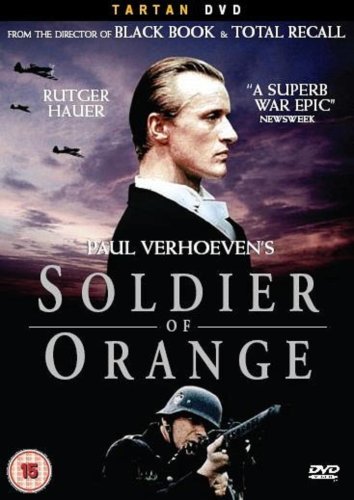
Paul Verhoeven's forth film reunites him once again with Rutger Hauer for what may very well be his best. Telling the story of 6 Dutch University graduates during the war, it mainly focuses on Erik Lanshof (Hauer) as he and Guus LeJeune (Jeroen Krabbé) escape to England from the German occupied Holland.

The film is in two halves, with an intermission at the midway point. The first half telling the story of life in Holland as the Germans take control, showing how the lives of the 6 friends go in different directions during the war. The second half tells how Hauer and Krabbé help the British trick the German's into thinking D-Day will occur in Holland instead of France.
Hauer is once again excellent in a role far removed from that of his previous two Verhoeven films, showing his underrated versatility as an actor that was lost once he moved to Hollywood and got stuck playing the bad guys. Here, he plays a student who gets caught up in the war and becomes a hero. Jeroen Krabbé is also excellent in a role far removed from his typical Hollywood villain, as the equally heroic Guus. After this film, Krabbé would team up with Verhoeven again on his next 2 films.

This is Verhoeven's first film without usual cinematographer, Jan De Bont, which probably explains why it looks so much better than his previous films. Where the lack of a huge Hollywood budget made Keetje Tippel look underwhelming in places, here, the film looks professional and expensive. Indeed, it was the most expensive Dutch film ever made at that time, but even then, it's budget was tiny compared to American productions. The look of this film is amazing, especially during it's climatic scenes, with a tuxedo clad Hauer, running across the beach as bombs go off around him. It's a remarkable image, and one that prompted Spielberg into persuading Verhoeven to move to Hollywood a few years later.

One thing that did surprise me was the subtlety from Paul Verhoeven. This being a Verhoeven film, he didn't shy away from showing a bucket of shit that Hauer hides a film in, or having another character on the toilet as he is blown up by a grenade, but even then, he's not as gratuitous as usual. There's less nudity than you'd expect from a Verhoeven film, although it's not gone entirely. The lovely Susan Penhaligon doesn't bother covering herself when she lies in bed with Krabbe as he and Hauer decide on who should go on a dangerous mission. That being said, Verhoeven's unsubtle instincts do allow him to show soldiers with missing limbs just after a bomb drops, decades before Spielberg started doing the same thing in Saving Private Ryan.

There is a lot to recommend this film, including a superb sequence where Hauer has been given a British Navy Uniform to wear as it is almost identical to a German one. He then walks amongst a large group of German soldiers, confidently saluting without drawing suspicion. It is a scene that is both funny and tense as you fear for him getting caught.

IMDB currently gives Soldier Of Orange an impressive 7.9 although I think it deserves slightly higher.

Sunday, 30 January 2011

Paul Verhoeven Film Restrospective - Keetje Tippel (Katie Tippel)

Keetje Tippel is the third film from Paul Verhoeven and reunites him with the two leads from his previous movie, Turkish Delight. Monique Van De Ven, in a role that is the polar opposite of that in Turkish Delight, stars in the true story of Keetje Tippel, who's extremely poor family emigrate to Holland in 1881.

Based on the Nobel Prize winning book by Neel Doff, the film shows how she escapes extreme poverty via good luck more than anything. In the first half of the film,she starts off doing poorly paid menial work before taking up prostitution. Fortunately for her, her second client doesn't want to have sex with her, but instead wants her to model for his paintings, so she spends the second half of the film hanging around with this painter's rich friends and begins dating Rutger Hauer, in a role that is also the polar opposite of that in Turkish Delight.

Ironically, for a film based on a prize winning true story, its with the story that this film disappoints as all of the good fortune that befalls her does seem to be entirely down to luck. She manages to find quite a few jobs easily enough at the start of the film, but for various reasons, fails to keep them for long. She didn't endure a long and sordid life in prostitution before finally escaping, but instead she just manages to get extremely lucky in her second attempt. After breaking up from Rutger Hauer, she's lucky enough to bump into one of his friends who turns out to be extremely rich.

This film is Paul Verhoeven's attempt at a period drama, and it's reasonably successful. The lack of a huge budget only really lets the film down near the end when what should be a shocking riot scene feels a bit underwhelming. Jan De Bont's average cinematography can also be partially blamed as he fails to light the scene with any real fear. Other than that, it's quite impressive. The period setting feels strange for a Verhoeven film, but moments of gratuitous full frontal male and female nudity quickly reminds you that this isn't a Merchant Ivory production.

IMDB currently gives this movie 6.8, which I'd agree with. Not a bad film, but certain elements leave you feeling slightly underwhelmed instead of moved.

Sunday, 16 January 2011

Paul Verhoeven Film Restrospective - Turkish Delight

Turkish Delight was Paul Verhoeven's second film as director and his first to star Rutger Hauer in the actor's feature film debut, although they had previously teamed up for the comedy TV series Floris in 1969, and would collaborate on 4 more films before reaching world wide fame in Blade Runner.

Turkish Delight is a film I know very little about but have wanted to see for quite a while. I think it is a sex comedy/drama, but that is all I know...

Well, it certainly wasn't a comedy, but the Sex/Drama was pretty accurate. The film begins with a continuously naked Rutger Hauer masturbating over a photo of an ex girlfriend, and then having sex with loads of women while being a complete arsehole. The film then jumps back 2 years to when they met, and their lives together during that period. For the first hour of the film, they are constantly getting their kit off and having sex but then the film slowly gets more serious.

Without giving too much away, this film reminds me considerably of Betty Blue in that they are emotional dramas with lots of sex and nudity, but are also great films. I'm actually surprised at how good this film is. It seems like a low budget exploitation film when it begins, but by the end, it somehow sticks with you. This is a lot more like what I expected from Paul Verhoeven. Nothing subtle, just lots of sex and nudity, with Rutger being a right bastard.

With all of the sex in this film, it fully deserves it's 18 certificate but surprisingly, in Holland, the film only has a 12 certificate. It's amazing how different countries are offended by different things. Lots of sex in Europe is fine for family viewing, but in America, it's usually banned or given an NC-17 rating. In America, gore and violence is perfectly suitable for kids, but bare a breast on live TV and there's a national outcry.

Rarely seen in this country, in Holland Turkish Delight was the most successful movie at the time of it's release in 1977. Part of the film's success is probably down to the book it was based on, which is apparently read a lot in Dutch schools.


IMDB currently gives Turkish Delight 7.2, which I agree with. Unknown in this country, this great film will appeal to lovers of great drama that are not easily offended, and anyone who liked Betty Blue.

Paul Verhoeven Film Restrospective - Wat Zien Ik (Business Is Business)

Starship Troopers was on TV the other night, which I hadn't seen in years, but as I was too tired to watch it I thought I'd hunt down my DVD. While searching, I realised that although I had many other films by the director, Paul Verhoeven, on DVD, I hadn't seen any of them in years, or not at all in the case of his early stuff. As a result, I've decided to watch them all, in chronological order, starting with his early low budget dutch movies, through his big budget Hollywood blockbusters such as Robocop and Total Recall, past the disastrous erotic drama that is Showgirls to his return to Holland for Black Book. Wish me luck.

Paul Verhoeven is a dutch director who is not known for being subtle. Rather than suggest something, he likes to go full on and show it. Sometimes this works for the better (the violence in Robocop, the infamous flash scene in Basic Instinct) sometimes it doesn't (all of Showgirls).

Seeing as his first film, Wat Zien Ik (aka Business Is Business or Diary Of A Hooker) from 1971 is a dutch comedy about prostitution in Amsterdam's famous Red Light District, I am not expecting subtlety to be on the menu. Not sure what I am expecting, to be honest, but I doubt I will like this one anywhere near as much as I love some of his latter films. I am surprised that at the time of my DVD's release in 2002, it “remained the fourth most popular Dutch film of all time”, as the notes inform me.

Having now seen the film, I think it was better than I expected, but not a film I'm in any rush to see again. Although it was a comedy, it was played a lot more straight than I imagined it would be. From the trailer that came on the DVD, it looked like it was going to be quite silly, but it wasn't, which was a good thing. It was more of a light hearted drama than an out and out comedy, and it was quite sweet in places. Unfortunately it was also quite episodic so it never felt like it was telling a story so much as showing a number of incidents that occur in the main character's career.

Despite the amount of gratuitous nudity in his later films, there was a surprising lack of it in this. Although the film was about a prostitute in Amsterdam's red light district, all of the scenes with her clients were less about them just having sex, and more about the various role plays that her clients make her do. One was a naughty schoolboy, one wanted her to pretend to be a surgeon and one wanted her and her friend to cover themselvein feathers and pretend to be chickens.

The cinematographer on this film was Jan De Bont, who did all of Paul Verhoeven's early films and later went on to direct Speed and Twister.

IMDB gives this film 5.9, which is about right. It's not a bad film and hasn't dated as badly as a lot of the films from the 70's do, but I'd only recommend it to people if they are Paul Verhoeven fans and are interested in his early work. Anyone else, skip it.

Saturday, 1 January 2011

Fight Club

Fight Club is a 1999 movie starring Brad Pitt (Se7en), Edward Norton (The Incredible Hulk) and Helena Bonham Carter (Howard's End). It is based on the book of the same name by Chuck Palahniuk and was directed by David Fincher (Se7en, The Curious Case Of Benjamin Button, The Social Network).

Edward Norton meets Tyler Durden on a plane. Together they make soap and form a Fight Club that we cannot talk about.


How in the hell does one write a brief synopsis of this movie without giving anything away? I try and keep these reviews spoiler free, giving only the barest of plot details in the description as I hate it when every nuance of the story is given away before the film starts, but to do so with Fight Club is impossible. You just cannot summarise all of the themes, story threads and ideas presented in this film without embarking on a long discussion. I will try though.

Fight Club is a film about Anarchy, and it is a wonderfully entertaining one at that. Most of us are happy to just live out our lives, letting everything pass us by, taking everything for granted and not taking much interest in what is going on around us. The characters in the film try to inject some anarchy into everyone's lives so that they can appreciate what they have and try to do something about what they don't have. The most obvious example of this in the film is that of the human sacrifices (not what it sounds like). As scary as it must be to be one of those human sacrifices, their lives are greatly improved as a result. These human sacrifices remind me considerably of the victims in the Saw franchise, although far less horrific. They go through something scary, but their lives are a lot richer as a result.

When this film first came out, it was a big flop. I personally wasn't that interested in seeing it as it looked like a version of those Jean-Claude Van Damme movies, such as AWOL, where he stands around fighting someone for 2 hours. That can be blamed on bad marketing as it's as far removed from those films as it's possible to get. Instead of 2 hours of mindless violence and non-stop fighting, we get get 2 hours of ideas, some of which are extremely funny, some are extremely horrific.

It also opened on the same day as The Sixth Sense which turned out to be one of the most successful movies ever made, so anything opening against that didn't stand a chance. It did share something in common with the Sixth Sense that I can't reveal here without ruining your enjoyment of either movie, but it does force you to re-watch both films again, and as a result, little things that you didn't notice first time suddenly jump out at you and make perfect sense in the context of the final film. However much you liked the film the first time you see it, you will like it even more on second viewing, and each subsequent viewing improves on the last.

It's partly because of this re-watchability that the film managed to find it's audience on DVD and since finding that audience, the film has developed a huge cult following and is one of those rare films that can change the life of the viewer. The importance of this film on society cannot be too greatly understated. The first rule of Fight Club has been parodied so many times in programs in everything from Spaced to Dancing With The Stars. As for the second rule...

The character of Tyler Durden has become legendary, and rightly so, with Brad Pitt bringing him to life so perfectly that it's impossible to imagine anyone else in the role. Edward Norton fully deserves his tag as one of the best actors of his generation after seeing him in this film, and Helena Bonham Carter as Marla Singer finally breaks off the shackles of all the period dramas from her early career in a part so deliciously juicy and refreshing, it's hard to picture her in a corset ever again.

Fight Club shares something in common with the first Spiderman movie, in that they are the only 2 films that I have seen at the cinema 3 times (I was a student so had a lot of free time, had a cinema pass so didn't need to pay and got talked into going a 3rd time by a girl in both cases, so good excuses). I have also seen it numerous times on DVD and enjoy it more each time I see it.

The reason I wanted to watch it again this time though was because I had just recently finished reading the book. In turning the Fight Club book into a film, the makers did the exact opposite to the makers of I Am Legend. Anyone who has just read the book and not seen the film would have told you it's unfilmable. They would have to change things significantly in order to adapt it to the screen. Anyone who's read the book and seen the film will be surprised at just how faithful it is. Everything from the book has made it to the screen, from the excellent narration, the cancer groups, the soap making, the fight clubs and that ending. The book is deliberately disjointed, broken down into the key scenes without going into what happens between then, but the film fills these gaps and expands on the ideas and themes presented. How this film was not even nominated for an Oscar for Best Adapted Screenplay is beyond me especially in a year where The Cider House Rules won.

IMDB